
Beyond Just a Ring: How Ultrahuman Builds a Complete System Around Your Body
You don’t usually go looking for products like this.
Most people land here because something feels slightly off. Energy dips during the day, inconsistent sleep, feeling tired even after resting, or just that sense that your routine isn’t working as well as it should.
And the frustrating part is—you can’t really pinpoint why.
That’s where Ultrahuman starts to feel different.
It doesn’t try to “fix” your health with one device or one feature. Instead, it gives you a system where different products focus on different parts of your body—and when you use them together, things start making sense in a way that most fitness apps or wearables never quite achieve.
This isn’t about tracking more.
It’s about finally connecting the dots.
The Product Ecosystem That Actually Works Together
If you look at Ultrahuman’s range, you’ll notice something interesting right away.
There’s no random clutter.
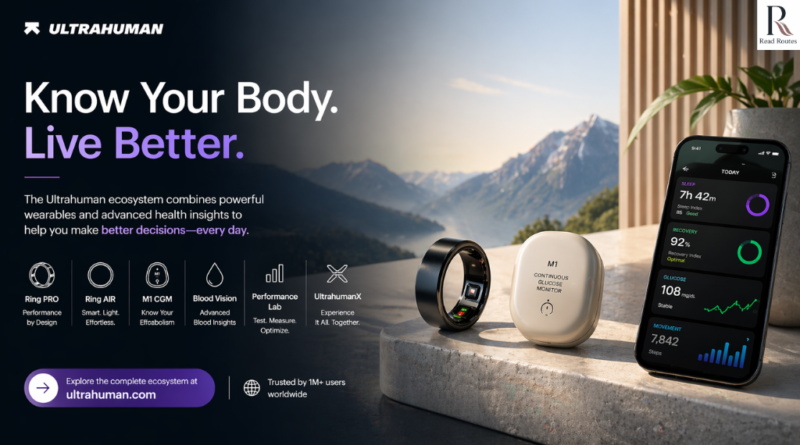
Everything sits inside a clear structure—wearables, metabolic tracking, advanced health insights, and performance-focused tools. And each one has a defined role.
The Ring PRO and Ring AIR handle your daily tracking—sleep, recovery, readiness. These are the products you wear constantly, and they quietly collect the kind of data that builds awareness over time.
Then you have the M1 CGM, which shifts the focus to metabolism. This is where you stop guessing how food affects you and start seeing actual responses.
Beyond that, there are deeper categories like Blood Vision and Performance Lab, which are more advanced layers for people who want to go further into biomarkers and long-term health insights.
And then there’s UltrahumanX, which ties everything together into a broader system experience.
Individually, each product is useful.
But together, they start answering questions you didn’t even realize you had.
Ring PRO: Performance Without Overthinking It
The Ring PRO is clearly positioned as a flagship product, and you can see why the moment you understand what it focuses on.
It’s built around one idea—helping you perform better by understanding your body’s state.
Not through complex dashboards or overwhelming data, but through clear signals like sleep quality, recovery levels, and readiness.
What stands out is how naturally it fits into your life.
You wear it all day, you forget about it, and then you check the app when you’re curious. And over time, those small check-ins start building a pattern.
You notice how late nights affect recovery.
You notice how stress shows up in your sleep.
You notice how some days you feel energetic for a reason, not by chance.
And slowly, without forcing it, your routine starts adjusting.
That’s where the value comes in.
Ring AIR: A Lighter Entry Into Smarter Tracking

If Ring PRO feels like a performance-focused upgrade, Ring AIR is where a lot of people start.
It’s simpler, slightly more minimal, and easier to get into if you’re new to this kind of tracking.
But don’t mistake simplicity for lack of value.
Ring AIR still gives you the core insights—sleep, movement, recovery—but in a way that feels less intense. It’s ideal if you’re someone who wants to start understanding your body without diving too deep immediately.
And interestingly, a lot of users who begin with Ring AIR eventually move towards Ring PRO once they start appreciating what the data actually tells them.
So it works both as an entry point and a long-term product depending on how far you want to go.
M1 CGM: Where Food Stops Being a Guess
This is the product that changes how you think about eating.
The M1 CGM isn’t about dieting or restrictions. It’s about visibility.
You get real-time glucose data that shows how your body reacts to different foods, meals, and even daily habits.
And this is where things get surprisingly eye-opening.
You might eat something you’ve always considered healthy and see a spike that doesn’t feel great. Or you might notice that combining certain foods keeps your energy more stable.
Even small habits—like walking after a meal—start showing visible impact.
And once you see it, you can’t unsee it.
You stop following generic advice and start making decisions based on what actually works for your body.
That’s a big shift.
Blood Vision: Going Beyond Surface-Level Health
While wearables and CGMs give you continuous data, Blood Vision adds another layer.
This is more about understanding your internal health through biomarkers.
It’s not something you check daily like a ring or app. It’s more periodic, but when combined with your ongoing data, it gives you a much deeper picture.
You’re not just looking at how you feel—you’re seeing what’s happening internally over time.
For someone serious about long-term health, this becomes a powerful addition.
Because now you’re not reacting to symptoms—you’re understanding trends early.
Performance Lab: For When You Want to Go Further
Not everyone needs this.
But for people who are genuinely interested in improving performance—whether physical or cognitive—Performance Lab becomes relevant.
This is where testing, insights, and deeper optimization come into play.
It’s less about daily tracking and more about structured understanding.
Think of it as moving from awareness to refinement.
Once you already know your patterns, this is where you start improving them more intentionally.
UltrahumanX: Connecting the Experience
When you start combining multiple Ultrahuman products, the experience becomes bigger than just individual tools.
That’s where UltrahumanX comes in.
It connects different data points—sleep, recovery, metabolism, biomarkers—into a more unified view.
Instead of checking separate metrics, you start seeing how everything interacts.
How your food affects your sleep.
How your sleep impacts recovery.
How your recovery influences your daily energy.
And that connected view is what makes the ecosystem feel complete.
What Makes People Stick With It
A lot of health products lose relevance after a few weeks.
You try them, explore the features, and then gradually stop using them.
That usually happens because the insights don’t evolve.
Ultrahuman feels different because your data keeps changing—and so do the insights.
One week you’re focused on improving sleep consistency.
Another week you’re experimenting with meal timing.
Then you start noticing stress patterns.
It doesn’t feel repetitive.
It feels like you’re slowly understanding your body at a deeper level.
And that keeps it interesting.
Deals, Bundles, and Where It Starts Making Sense
If you’re thinking about getting started, the bundles are worth paying attention to.
Because using just one product gives you a partial view.
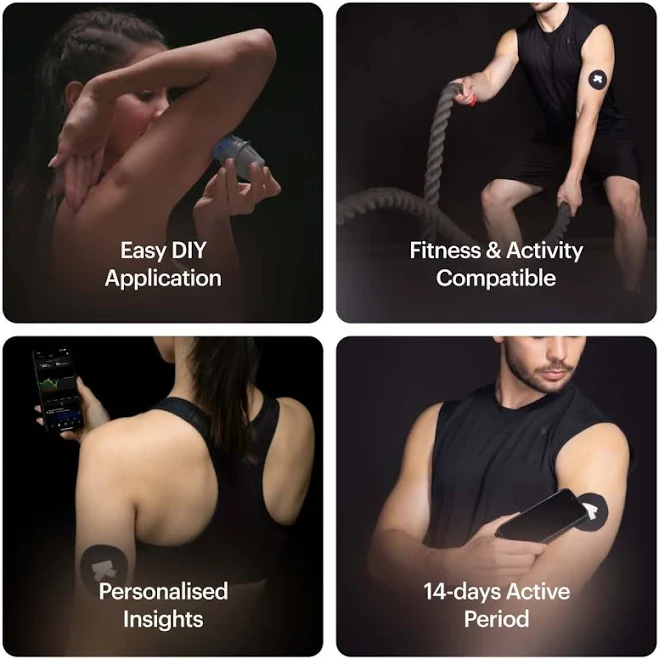
When you combine something like a ring with the M1 CGM, things start connecting faster.
You’re not just tracking how you feel—you’re understanding why.
And that’s where the value becomes much clearer.
There are also periodic offers that make the entry point easier, especially if you’re exploring more than one product.
So instead of building everything step by step, you can start with a more complete setup.
The Moment It Starts Feeling Worth It
This isn’t something that feels exciting on day one.
And that’s actually a good sign.
Because the value here builds gradually.
After a couple of weeks, you start noticing patterns without even checking the app first.
You understand why certain days feel off.
You adjust small things in your routine without overthinking.
You stop relying on random advice and start trusting your own data.
And once that happens, it stops feeling like something you bought.
It becomes something you rely on.
Final Thought: It’s Not About Doing More, It’s About Knowing More
You don’t need to overhaul your lifestyle to use Ultrahuman.
You don’t need strict routines or extreme discipline.
You just need a little curiosity.
Because once you start seeing how your body actually responds—to sleep, food, stress, and daily habits—you naturally start making better decisions.
And that’s what makes this ecosystem stand out.
It doesn’t try to force change.
It just makes things clear enough that change happens on its own.
If you’ve been trying to “figure things out” on your own for a while, this is one of the few systems that actually helps you do it—without making it complicated.