
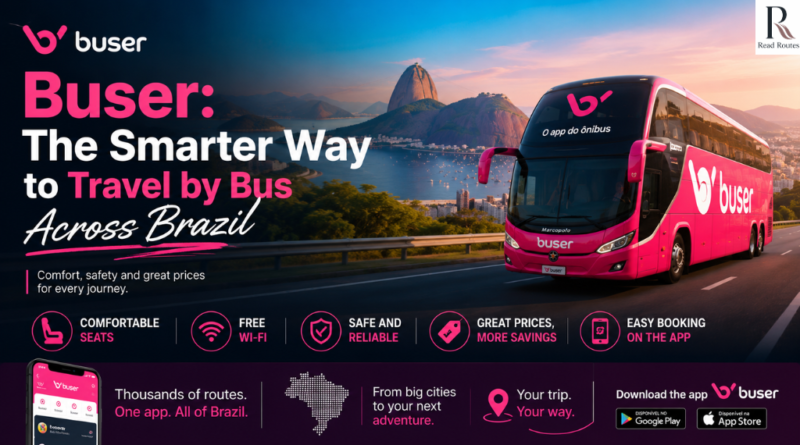
Buser: The Smarter Way to Travel by Bus Across Brazil
If you’ve ever stood at a rodoviária staring at the ticket prices and wondered why a few hours on a bus costs almost as much as flying, you’re exactly the person Buser was built for. It’s a bus travel platform that connects passengers directly with licensed charter companies across Brazil, cutting out the traditional ticketing markup and replacing it with a model where the seat you book is often a fraction of what you’d pay at the counter. Whether you’re heading from São Paulo to Rio, Belo Horizonte to Uberlândia, or anywhere in between, Buser has quietly become one of the most talked-about ways to get around the country without draining your wallet.
Here’s a proper look at what’s actually on the platform, how the different travel options work, and why so many people have made it their default choice for intercity travel.
The Core Categories: How Buser Is Organised
When you open the Buser app or website, the experience is built around a few clear pillars. The main booking flow is the route search — you enter where you’re leaving from and where you’re going, pick your dates, and the platform shows you the available departures along that route, sorted by price and time. Alongside this sits the Promoções section, which is exactly what it sounds like: a constantly updated list of routes and departures currently being offered at reduced prices, often significantly below the standard fare.
Beyond the core travel booking, Buser has expanded into a section called Experiências — a newer addition to the platform that brings curated trips and themed outings into the same booking flow as standard intercity travel. There’s also Viagens, your personal trip history and upcoming bookings, and an Ajuda section that houses support resources for anything you need help with before, during, or after a trip.
What ties all of this together is the underlying model: Buser doesn’t own buses. Instead, it works with a wide network of partner charter companies — properly registered and regulated by ANTT, the federal land transport authority — and fills their buses with passengers heading in the same direction. The result is a system that behaves a lot like ride-sharing apps people are already familiar with, but for intercity coach travel.
The Route Network: Where You Can Actually Go
One of the most impressive things about Buser once you start exploring is just how far the route network extends. The platform’s strongest presence is in São Paulo, which has more departures and connections than any other city in the network — but from there, the web spreads out across the country. Rio de Janeiro, Belo Horizonte, Campinas, and Uberlândia are among the most frequently searched destinations, and the broader network reaches across a large number of Brazilian states, with particularly strong coverage in Minas Gerais, Rio de Janeiro, São Paulo, and Santa Catarina.
This matters because it means Buser isn’t just useful for one or two popular routes — it’s a genuine alternative for a huge range of intercity trips, from short hops between neighbouring cities to longer cross-state journeys. If you’re the kind of traveller who visits family in another state regularly, takes weekend trips to the coast, or needs to move between cities for work, there’s a very good chance your route is already covered.
The Buses: Comfort That Rivals Premium Carriers
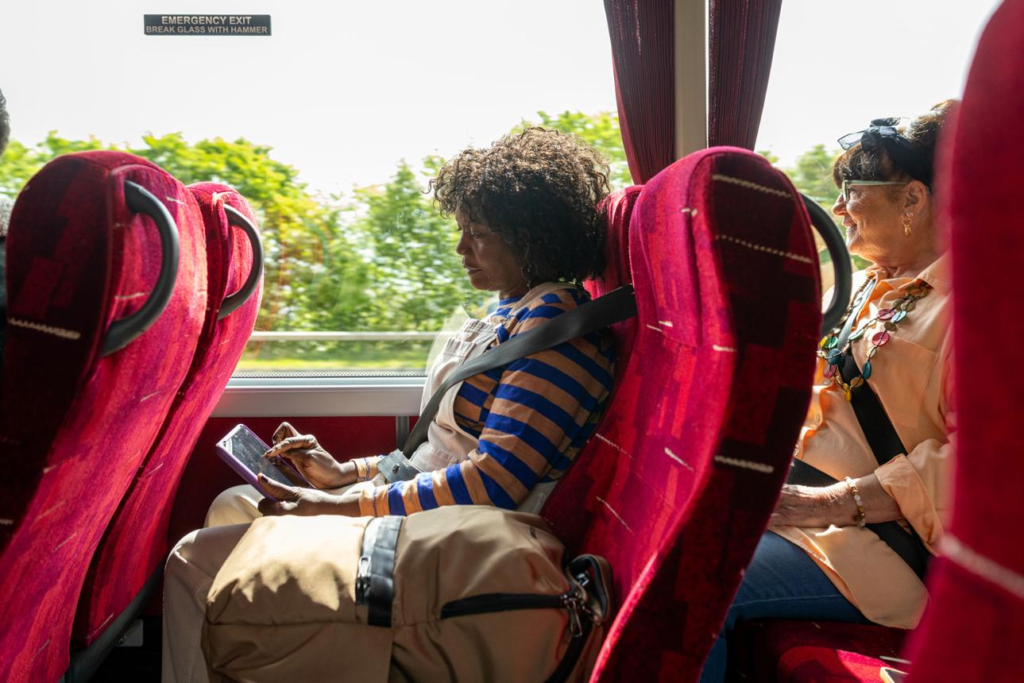
A common assumption with lower-cost travel options is that comfort gets sacrificed for price — and Buser is one of the clearest examples of why that assumption doesn’t hold up. The partner buses operating on Buser routes are executive-grade charter coaches, the same calibre of vehicle used for premium corporate and tourism transport. Reclining leather seats, footrests, and on some routes, seats with built-in massage functions are part of the experience travellers consistently highlight. Riders heading on long routes like São Paulo to Rio frequently describe the seat comfort as comparable to — or better than — what they’d get on a domestic flight, minus the cramped legroom and minus the airport queues.
Every vehicle is monitored through GPS telemetry, and the partner companies are required to use trained, certified drivers along with fatigue-detection camera technology. For anyone who’s hesitant about coach travel because of safety concerns, this is one of the most reassuring aspects of how Buser operates — the safety infrastructure is built into every trip, not an optional extra.
Booking: App, Website, or WhatsApp
Buser has made booking about as frictionless as intercity travel gets. The app — available on both major mobile platforms — lets you search routes, compare departure times, and complete your booking without ever needing to visit a physical counter or stand in a queue. For those who prefer a more conversational booking experience, Buser also offers a WhatsApp booking option, where you can message directly and have someone help you find the ideal trip and complete your reservation right there in the chat.
For travellers using the Fretamento booking type specifically, there’s also real-time boarding tracking — so on the day of your trip, you can follow exactly where your bus is and when it’s expected to arrive at your boarding point, removing the guesswork and anxiety that often comes with waiting at a pickup location.
Promoções: Where the Real Savings Happen
The Promoções section deserves its own spotlight because this is genuinely where the most loyal Buser users do most of their booking. Routes and departure times that are currently being offered at discounted rates are pulled together here, and because availability shifts constantly based on demand and bus fill rates, checking this section regularly before committing to a fixed departure time can lead to substantial savings compared to booking the first option that appears in a standard search.
Buser has also run major promotional campaigns tied to company milestones and seasonal moments — these campaigns have historically opened up extremely low fares on selected routes for a limited window, turning short trips into genuinely impulse-buy territory. The takeaway here is simple: if your travel dates have any flexibility at all, browsing Promoções before locking in a route is one of the smartest habits a regular Buser user can build.
Experiências: More Than Just Getting From A to B
The Experiências section represents Buser’s evolution from a pure point-to-point transport platform into something closer to a travel discovery tool. Through this section, the platform has started connecting travellers to themed outings and destination experiences — amusement parks, day trips, and curated leisure routes — bundled with the transport itself. One recent example saw Buser launch a dedicated route connecting São Paulo directly to a major amusement park, turning what would otherwise be a multi-step trip involving transfers into a single, bookable journey.
This expansion matters for anyone planning leisure travel, because it removes a layer of planning that usually falls on the traveller. Instead of booking a bus to a nearby city and then separately figuring out transport to the actual destination, Experiências increasingly packages that whole journey together.
Why Buser Is Worth Choosing for Your Next Trip

When you put it all together, the case for Buser is straightforward. The pricing model genuinely undercuts traditional rodoviária fares by a wide margin on most routes, without compromising on the comfort of the actual journey — executive coaches with reclining seats and modern amenities are the norm, not the exception. The safety framework, with certified drivers, GPS monitoring, and fatigue detection, is built into the experience by default. The booking process is as modern and frictionless as anything else in your phone, with app, web, and WhatsApp options covering every kind of traveller. And the platform keeps expanding what “a Buser trip” can mean — from a simple point-to-point fare to a fully bundled leisure experience.
For day trips, weekend getaways, visits to family in another city, or longer cross-state journeys, Buser has built a network and a model that consistently puts more money back in your pocket without asking you to compromise on how the journey actually feels. The smartest way to experience it is simply to open the app, enter where you want to go, and see what’s available — chances are the price will be the first thing that convinces you.
A Few Practical Tips Before You Book
A handful of small habits make the Buser experience even smoother. Booking ahead rather than last-minute tends to surface a wider range of departure times and fare options, since seat availability on each charter naturally narrows as the date approaches. Checking both your outbound and return journeys against Promoções separately is worth doing too — round-trip savings often come from two independently discounted legs rather than a single bundled discount. And if you’re new to the platform, signing up through a referral link from someone who already uses Buser regularly often unlocks a welcome discount on your first booking, which is a nice way to try the service at an even lower entry cost.
For those who travel the same route often — a weekly trip home, a recurring work commute between cities — keeping an eye on the app for new departure times being added is worthwhile too, since Buser routes evolve based on demand and new options appear on popular corridors fairly regularly.
Whatever your travel pattern looks like, the underlying promise stays the same: comfortable, safe, well-monitored coach travel at a price that actually respects your budget. That combination is rare, and it’s the reason Buser has become a fixture in so many travellers’ routines across Brazil.